
Damiano Tucci, Sophia Banks & Arwen Dayton: 5 Things I Wish Someone Told Me When I First Became A Filmmaker
An Interview With Diane Strand
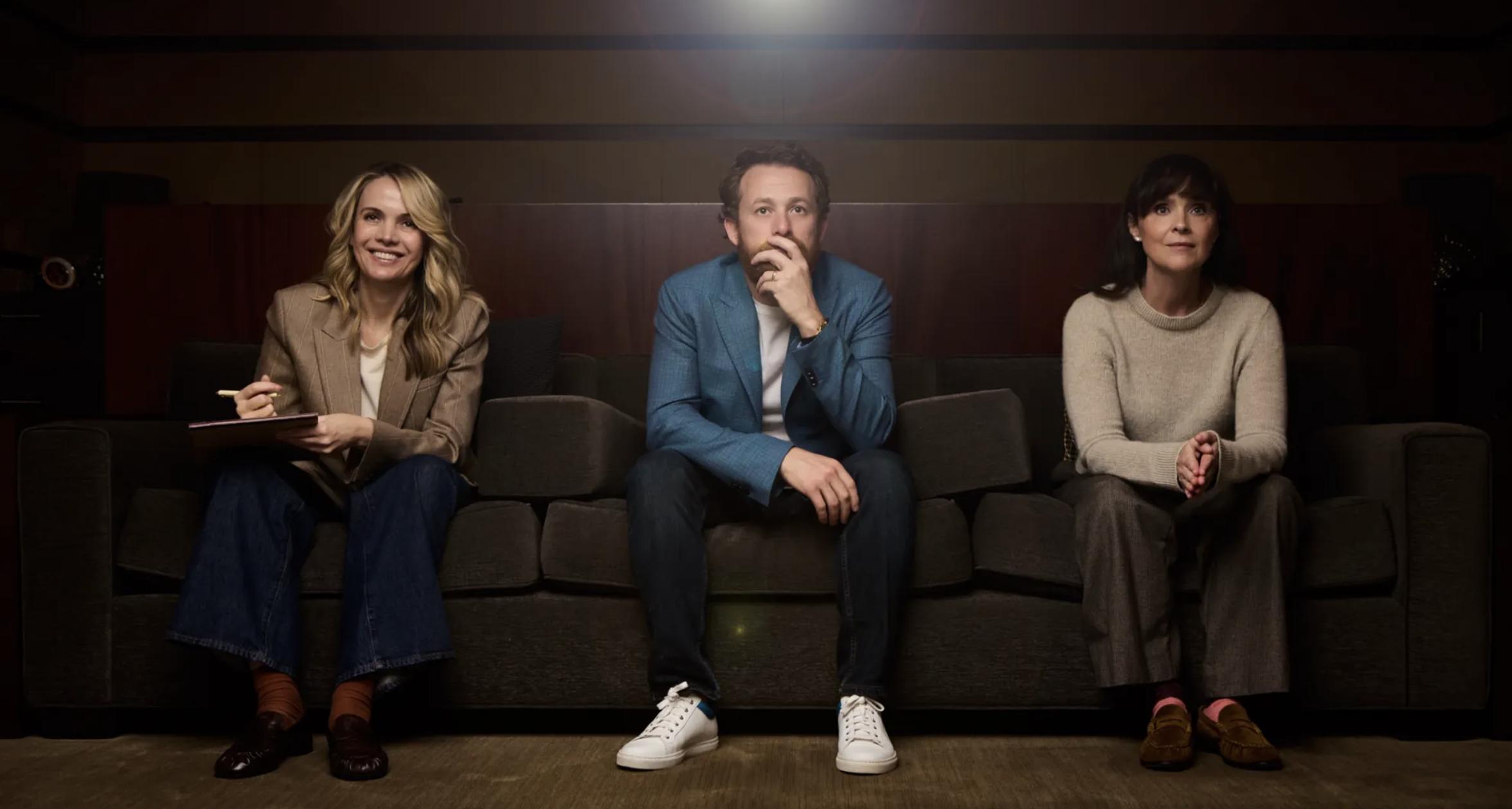
Understand every aspect of the business cold. Stay adaptable, think commercially, and always protect your project’s path to audiences.
…
As a part of our series called “5 Things I Wish Someone Told Me When I First Became A Filmmaker”, we had the distinct pleasure of interviewing Damiano Tucci, Sophia Banks, & Arwen Dayton.
Getaway Entertainment is a film and television production company focused on developing and producing bold, commercially viable, and filmmaker driven stories for a global audience. Founded by a team of accomplished creatives and producers, the company was built to champion elevated storytelling across genres while partnering closely with writers, directors, and talent to bring distinctive projects to market. Getaway’s slate reflects a balance of prestige, audience appeal, and cultural relevance, positioning the company as a rising force in independent and studio filmmaking. The company was co-founded by director and producer Sophia Banks, producer Damiano Tucci, and best-selling author and screenwriter Arwen Elys Dayton. Banks brings a background in award winning directing across more than 200 high profile campaigns and feature films, shaping Getaway’s creative vision and filmmaker relationships. Tucci oversees production and strategy, with experience shepherding ambitious projects from development through release. Dayton leads development with a strong literary and narrative foundation, helping generate original and adapted material with broad international appeal. Together, the founders designed Getaway Entertainment as a creative home for premium storytelling with commercial intelligence. With a growing slate and strong industry partnerships, the company continues to expand its footprint by producing films that resonate with audiences while supporting filmmakers with both creative freedom and disciplined execution.
Thank you so much for joining us in this interview series! Our readers would love to get to know about your production company Getaway Entertainment a bit better. Can you tell us a bit of the ‘backstory’ of how you three came together to form Getaway?
Sophia — Getaway began with three people from different corners of the industry coming together over the same belief: story matters. Damiano, Arwen, and I each arrived through different paths — producing, writing, and directing — but we kept seeing the same thing happen. Bold scripts and strong performances were being reduced to “content,” stripped of risk and intention. We formed Getaway to protect the storytelling process. It’s a place built around performance, point of view, and respect for the audience — where filmmakers and actors can take chances, make personal work, and create films that feel urgent rather than transactional.
Damiano: We’ve all been friends for a long time. We were all off doing our own things and becoming successful in our respective fields. Then we got together to catch-up over dinner and realized we should all be working together!
Arwen: I love these guys to pieces and can’t think of anything better than making art with good friends.
Each of you have a distinct specialty with Damiano being a highly sought after producer, Sophia’s work behind the camera as a director and Arwen’s work as a screenwriter, can you share a story with us about what brought you to these specific career paths?
Arwen: I love writing novels, but it’s lonely work! The great thing about movies is that you get to work with lots of talented people, and when things go right, everyone is contributing their personal artistry and perspective to help make the best film possible. When you write a novel, you of course are writing for the reader’s enjoyment. And when you make films, you want to audience to love the ride…but there are so many more steps along the way. You get to write characters that actors can sink their teeth into, stories that a director can breathe visual life into, worlds that so many people can add dimension to. What could be more fun than that?
Sophia — I always wanted to be a director. I loved movies for as long as I can remember — from The Wizard of Oz to Spielberg films — and I knew I wanted to be part of that world. Growing up in Australia, it felt distant and inaccessible. I tried acting, starting drama school at ten, and appeared in a few small shorts, but it quickly became clear that wasn’t where my passion was. I explored costume and fashion next, before finally realizing that directing was the thing I truly loved. I began in commercials, then moved into short films. One short for Christian Siriano went viral and was featured in Vogue and the Tribeca Film Festival’s Moët Competition. I followed that with Unregistered, starring Trevor Jackson and Dylan Penn, which premiered in competition at the Tribeca Film Festival. I then directed another short, Proxy, before going on to make my feature debut, Black Site.
Damiano: Films have always been a place of joy for me. As a kid, I looked forward to weekends which always included 2 key events. 1) Going to the movie theater and seeing whatever new movie was out and 2) going to Blockbuster and picking two other movies to watch. This quickly led to me, at a very young age, making movies with my friends. We would take a VHS of our favorite films and intercut our 10-year-old selves doing the scenes from the films. This eventually led me to acting and when I was 12, I ended up on a real movie set. And I fell madly in love. I got to witness a group of people coming together with the common purpose of creating magic, and I knew right there and then that there was nothing else I wanted to do. I spent the next few years ditching school, PA’ing in all the departments and learning as much as I could. When I finally finished school I went right into making things. This started with music videos, and then commercials and eventually led to making feature films.
Can you share a funny or most interesting story that occurred to you in the course of your filmmaking careers?
Sophia — Snake wranglers on set in Australia- I wont say any more. While I was filming my first movie in Australia, Covid happened and I had to spend two weeks in a government guarded quarantine, that was pretty interesting.
Damiano: I share a last name with a pretty famous Tucci, Stanley Tucci. I have no direct relationship as far as I know. But I was doing a film in New York and there was a restaurant my friend wanted to go to, he called and there was no way we were getting a table. Then I called and the caller ID on my phone showed up as Tucci and the hostess assumed I was Stanley Tucci…I didn’t correct her…we get there, and they are clearly confused/annoyed so I just roll with it and say no, no my dad Stanley will be joining soon…my “dad” never showed up…but we did leave a good tip, so hopefully that made up for it.
Arwen: The director of the horror movie we shot last year is deathly allergic to nuts. We had signs all over the place calling it a “nut-free zone,” the catering and craft services all knew to be careful about nuts. And then on one of the last days a part-time crew member thoughtfully handed the director a small thank you present of local chocolates…full of nuts. I was a writer/producer on that set but also maybe I saved the director’s life by being there to intercept those potentially fatal snacks and give them a new home in my own stomach?
Who are some of the most interesting people you have worked with at Getaway? What was that like? Do you have any stories you can share?
Arwen: I love the production designers we work with. Seeing the movie in my head become something in three dimensions–something so much richer and more nuanced than what I had imagined–is the moment when the story becomes “real”.
Sophia — People who are brave and want to tell great stories. Actors willing to sit in discomfort. Producers who protect the work. Writers who aren’t afraid to tell bold stories. Getaway attracts collaborators who care deeply about story and audience, and those are the relationships that last.
None of us are able to achieve success without some help along the way. Is there a particular person who you are grateful towards who helped get you to where you are? Can you share a story about that?
Sophia — I have been fortunate to shadow some great directors. Its amazing when you ask to learn who is willing to teach you.
Damiano: That’s a list that is too long to write out, I’ve had some incredible mentors and collaborators over the years. I will say however the inspiration I always get from watching great films is something that I am eternally grateful for. The film makers who poured their heart and soul into creating art that stands the test of time. If I’m ever feeling like the mountain is too tough to climb or just need an escape, popping on a film always does it for me. So I’m very grateful for that.
Arwen: Mel Brooks. I’ve never met him in person. But when I was a kid, we had about four movies on VHS tape, which I think we’d just recorded off TV. I watched them over and over, and one of them was Young Frankenstein. Even though I don’t really write comedy, that movie was foundational to my sense of humor and outlook on movies.
Can you please give us your favorite “Life Lesson Quote”? Can you share how that was relevant to you in your life?
Sophia — “Pressure is a privilege.” As a director you spend so long trying to develop a script and put it all together, and then before you know it you’re in pre-production or on set. You have to remind yourself as you’re deep in the pressure of a shoot, how lucky you are to be shooting your movie and to enjoy the process. It’s a privilege to tell stories.
“Problems are opportunities.” Film making is problem solving. I use to feel once I hit barriers things were going wrong but I’ve learned this saying from some great mentors: problems are opportunities to make your story better. Maybe you loose a location and you end up making the scene work somewhere else and it’s actually better. You have to embrace the chaos and if you are there and in the moment you will make something great.
“It’s your responsibility to make the actors look good” When you’re making your movie, once you have the actors, you need to look at what makes them unique and special and make sure you’re adjusting the movie to show them at their best. That the story sets them up in a way that allows the audience to connect, that you’re highlighting their strengths. This goes down to using the right lenses on them, dressing them in the right clothes, and so on. As the director, it’s my responsibility to do everything to showcase my actors and make them shine.
What are some of the most interesting or exciting projects you are working on now?
Arwen: I’m excited for Tilt, which we’re shooting in LA in early 2026, which I wrote and Sophia is directing. It takes place all over Hollywood and Downtown and we’re pouring everything we love about both Los Angeles and the movies into this film.
Sophia: We’re about to go into production on Tilt, a feature I’m directing in Los Angeles. It’s a fun, stylish film with fun, real characters — the kind of movie I want to see as an audience member. We’ve assembled an incredible team. With our cinematographer, I’m focused on creating a visually beautiful film that feels intentional and alive. And our wardrobe is going to great. And i am excited to show off the city I love, LA.
Which aspect of your work makes you most proud? Can you explain or give a story?
Sophia: My priority on set is creating an environment where actors feel safe enough to take risks. I care deeply about performance — protecting it through camera choices, blocking, and tone. If an actor walks away feeling they did some of their best work, I’ve done my job.
What I’m most proud of is how much care we put into quality at every stage — especially for the budgets we’re working with. We take real time choosing our collaborators: cinematographers, production designers, costume designers, editors. Those decisions shape the film more than anything else. We’re obsessive about the look and feel of a project, and about pushing as much quality onto the screen as possible for every dollar spent. That means being patient in prep, intentional in production, and disciplined in post. We also take editing and testing seriously. We give films time to breathe, to evolve, and to respond to audiences before locking them. That process isn’t about over-polishing, it’s about clarity.
Damiano: The effect we can create on other people. This is something that I’ve only come to learn with time. I was once at charity function and talking with a stranger and naturally we started talking about movies. He started telling me about his mom having recently passed and how one of his greatest pleasures in life was watching movies with her and while she was in the hospital they watched a film together that made them laugh, cry and have a great time. Turns out that film was a film I produced, The Last Word. That was probably one of the first times I fully realized the profound effect and responsibility we have as filmmakers and that is something I’m very proud of.
Here is the main question of our interview. What are your “5 things I wish someone told me when I first started in the industry” and why. Please share a story or example for each.
Sophia — Five Things I Wish Someone Told Me Starting Out
1. Study the craft seriously.
Great textbooks exist. Learn the rules before breaking them. (I can give a list)
2. Understand every department.
If you have a chance go spend time in every department and understand what they are doing.
3. Make things constantly.
Shot shorts, commercials what ever you can.
4. Commercials are invaluable training.
If you can get some jobs in that field you learn so much.
5. Shadow whenever possible.
Sets are classroom. I got to shadow Wim Wenders and also on the set of mission impossible, its very valuable to see how other people work especially as a director as you can work in vacuum.
Arwen — Five Things I Wish Someone Told Me Starting Out
1. There are a lot of reasons a movie gets made, and it’s often not because it’s the best script.
So not only do you need to write well, you must be able to help assemble the other parts of a movie to see your script be realized.
2. Have confidence in your own taste, your own message, and your own enjoyment of your story.
Take notes if they resonate and will make your story better, but no one is a better arbiter of your creation than you are.
3. You will always feel you need a bigger budget than you have, no matter the size of movie you are making.
So do everything you can to be thoughtful and efficient in every shot.
4. Get as many shooting days as you can in the production schedule!
You never know what scene may become an unexpected gem as it comes to life–and you want some breathing room.
5. Watch great, classic movies as often as you can.
There’s a reason they’re classics.
Damiano: Five Things I Wish Someone Told Me Starting Out
1. Fight for what you believe in.
2. Learn from your mistakes.
3. Make sure everyone is making the same film.
4. Persistence and hustle go a long way.
5. Understand every aspect of the business cold. Stay adaptable, think commercially, and always protect your project’s path to audiences.
When you create a film, which stakeholders have the greatest impact on the artistic and cinematic choices you make? Is it the viewers, the critics, the financiers, or your own personal artistic vision? Can you share a story with us or give an example about what you mean?
Arwen: I’m thinking about the viewers first–and I try to include myself as one of the viewers, because I want to make movies that I want to see too. I also want a film to give actors something great to swing for, some maddening obstacles to overcome, and something to fall in love with.
Sophia The audience. Getaway’s mission is to make films people genuinely want to watch, stories that travel, connect, and stay with you. Caring about the audience doesn’t dilute vision; it sharpens it. Some of the greatest director always thought about the audience from Hitchcock, Spielberg to James Cameron. At every moment they know what they want an audience to feel.
Damiano: Definitely the audience. We want the audience to participate in what we’re creating. We want to make them feel things and go on the ride with us. This of course is easier said than done. So we’re big believers in testing films. I remember spending months in the edit with a director and we thought the film was perfect, we didn’t want to change a frame. Then we tested it. And we learned that what we wanted to get across wasn’t coming across. Having spent so much time in the edit and with the script and with the characters, we knew things that the audience didn’t know, so it was having a very different effect on us then it was on the audience. Testing allowed us to realize that and then change it so we could create that effect on everyone not just ourselves.
You are a person of great influence. If you could start a movement that would bring the most amount of good to the most amount of people, what would that be? You never know what your idea can trigger. :-)
Sophia: I do think this is happening right now. A return to the spirit of the 1970s American New Wave, when filmmakers put story first, trusted audiences, and took real risks. Films were shot in real locations, with rough edges and lived-in performances. Directors used the full language of cinema — framing, movement, silence, and ambiguity — instead of over-explaining. That era respected the audience’s intelligence. I’d love to see a rebirth of that mindset where studios and streamers take risk with new filmmakers and stories.
We are very blessed that some of the biggest names in Business, VC funding, Sports, and Entertainment read this column. Is there a person in the world, or in the US whom you would love to have a private breakfast or lunch with, and why? He or she might see this. :-)
Sophia — David Fincher
Damiano: Stanley Tucci. For a few reasons, one: we share a name…and two: he’s an incredible artist, what he did with the film The Big Night was so beautiful.
Arwen: Richard Curtis. In my mind, he’s maybe the greatest screenwriter of all time.
How can our readers further follow you online?
Our social
@sophiabanksc
@getawayentertainment
This was very meaningful, thank you so much! We wish you continued success!